
Why stationery mistakes refuse to stay stationary


Some spelling errors are easy to forgive. A missing apostrophe, a rushed typo, a stray capital letter — we’ve all been there.
But contextual spelling errors are different. They’re harder to spot, more persistent, and often slip past automated checks entirely.
Two of the most commonly mixed-up words in the English language are stationary and stationery.
Thought one was British and the other American? Think again. Despite the one-letter difference, both words have completely different definitions, so let’s quickly brush up on them.
Stationary
According to the Cambridge Dictionary, which defaults to British English, stationary means “not moving or not changing”. The American definition also appears on the same page, but it’s exactly the same.
Examples include:
- a stationary car/train
- The traffic got slower and slower until it was stationary.
- The rate of inflation has been stationary for several months.
- House prices have been stationary for months.

Stationery
Cambridge Dictionary defines stationery as “the things needed for writing, such as paper, pens, pencils, and envelopes”.
Examples include:
- business/personal stationery
- I got these folders at the stationery store.
- The company realised it was spending too much on stationery.
- a stationery cupboard

How do you remember the difference?
It’s often good to associate something you’re trying to remember with something else — or even better — multiple things. This builds neural pathways in your brain, allowing for easier memory recall.
There’s a very simple way to distinguish between stationary and stationery. Look at the second letter of the following words:
Stationary
Parked car
Stationery
Pen & pencil
If you can memorise just one of these, it makes it a lot easier!
Alternatively, just remind yourself of all the stationery items that begin with ‘e’:
- envelope
- eraser
- exercise book
- elastic bands
- exam pad
- envelope opener
- extension file
- executive notebook
Prevalence of stationary and stationery
A quick Google reveals that stationery is far more common, appearing in 330 million results compared to the 196 million that stationary does.
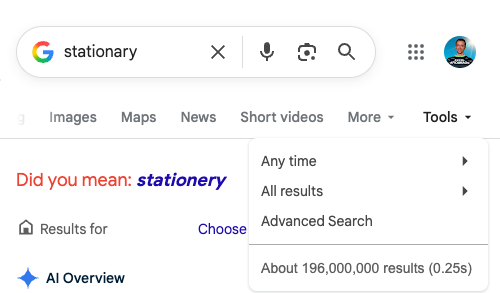
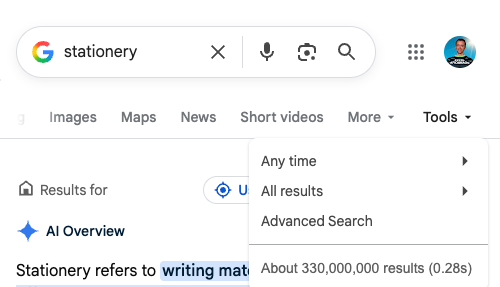
It’s also more common to see stationery misspelt with an ‘a’ than stationary with an ‘e’. After all, stationery encompasses a wide range of office products we use in everyday life, whereas stationary is a relatively formal term you’re more likely to see in reports and documents than in casual speech and on websites.
Even stationers get it wrong
Unfortunately, the internet is swamped with misuse of these words. Many of the search listings I found were websites belonging to small and medium companies, but there were also plenty of social media posts (mainly from Reddit).
You’d think a stationer, which is a person or business that sells stationery, would be the last to mess up. This is their wheelhouse, after all — but you’d be wrong.
Recently, UK stationer TGJones took over all 480 high street WHSmith stores and rebranded them accordingly.
At the St Albans branch, the sign erected adjacent to the entrance doors featured a glaring mistake, with stationary appearing instead of the other. It has since been replaced, but inevitably at the cost of time and money.
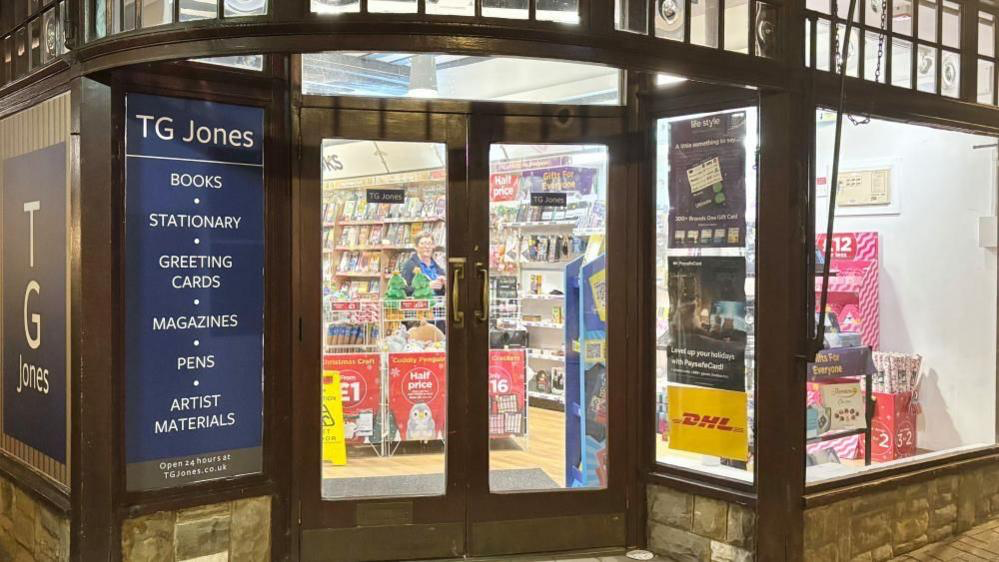
Given TGJones was established through a £76 million acquisition and employs around 5,000 staff, they don’t have the excuse of we’re just a family business to fall back on.
Unfortunately, this is by no means the only high-profile case.
Back in 2023, Sports Direct released its Back to School Stationery Kit with the gaffe clear for all to see. To make matters worse, the product was located directly below a bunch of larger, correctly-spelt stationery sets.
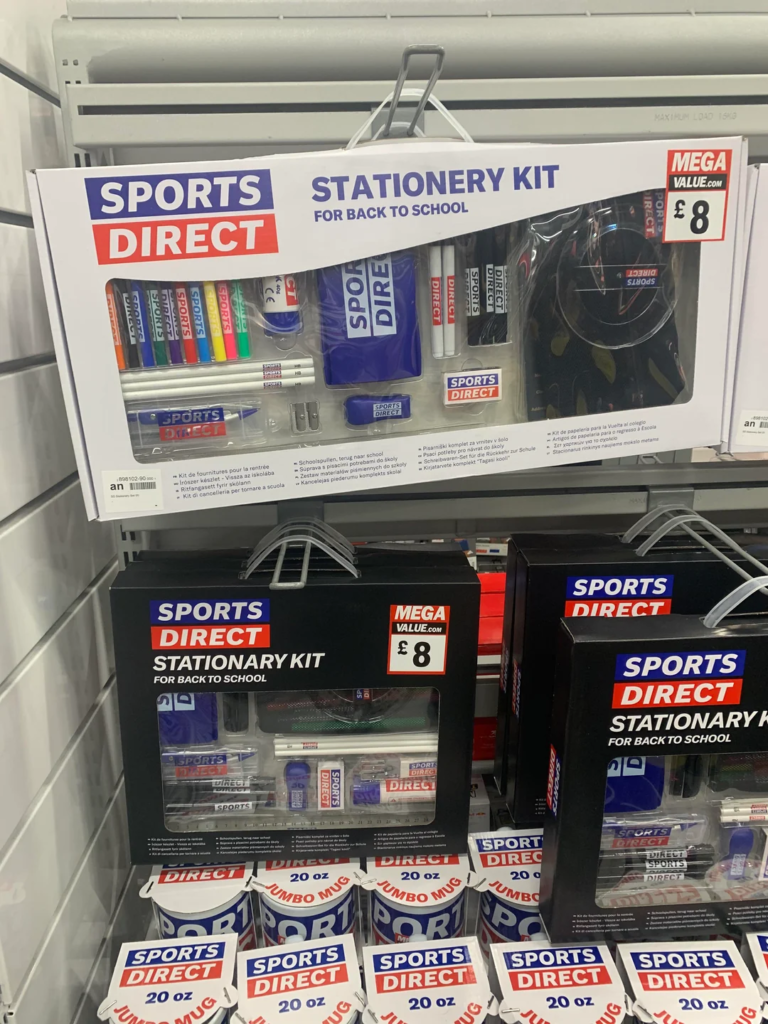
At the Swindon store, they ended up sticking labels on top of the erroneous ones with the word correctly spelt.
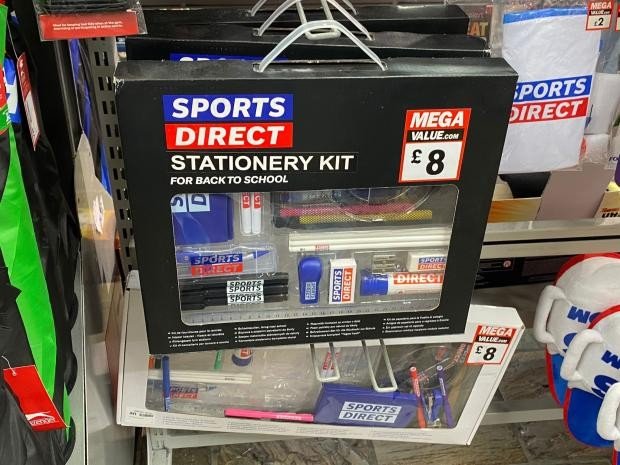
At least they avoided getting the boxes reprinted, but talk about plastering over the wound!
A multi-league audit of football club stores
After reading about the TGJones and Sports Direct cock-ups, I felt compelled to investigate.
Being a big football fan, I was already aware that stationery sets are a very common form of merchandise amongst clubs. I noticed a couple of Premier League teams had spelt it wrongly on their websites, along with some lower league sides.
While stationary is a word used in football within a technical or analytical context — often to describe a still ball at a set piece — it rarely features in the world of retail, where concrete nouns are the norm.
At this point, I thought, why not rattle through every one of the 92 English Football League club stores?
And so I proceeded with my full-on investigation…
I spent a couple of hours trawling through each webpage, scanning with my own eyes and searching for instances of “stationary” using CMD + F. A very sophisticated way of conducting research, I know!
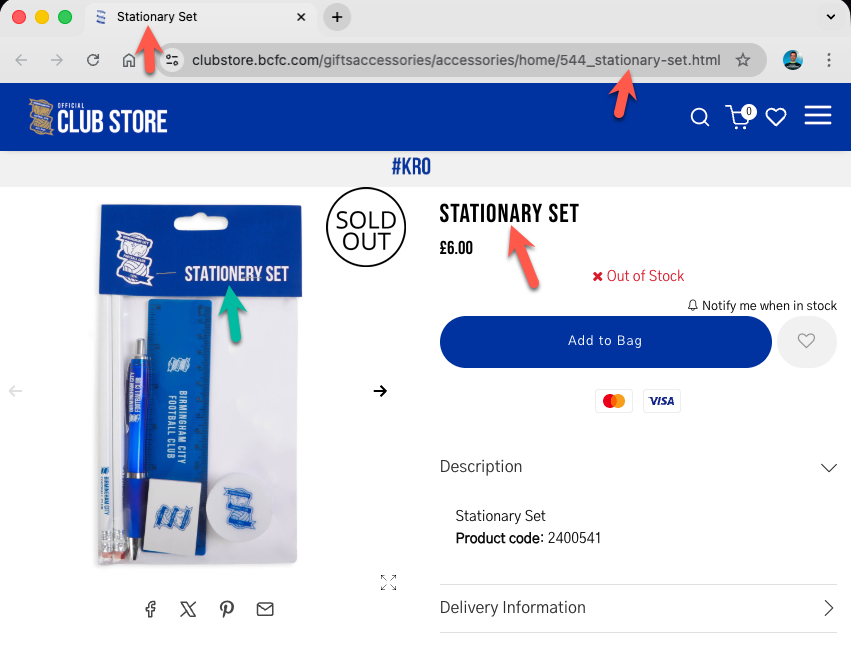
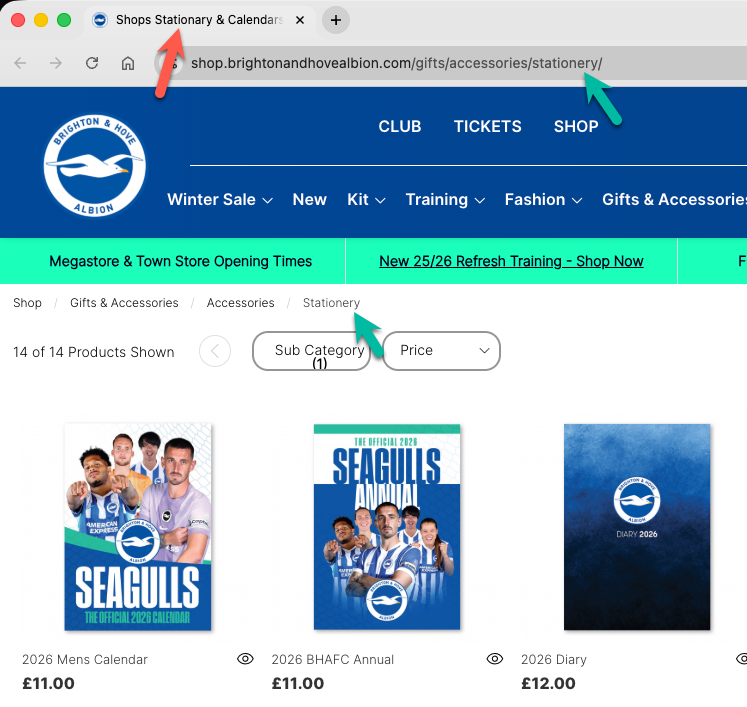
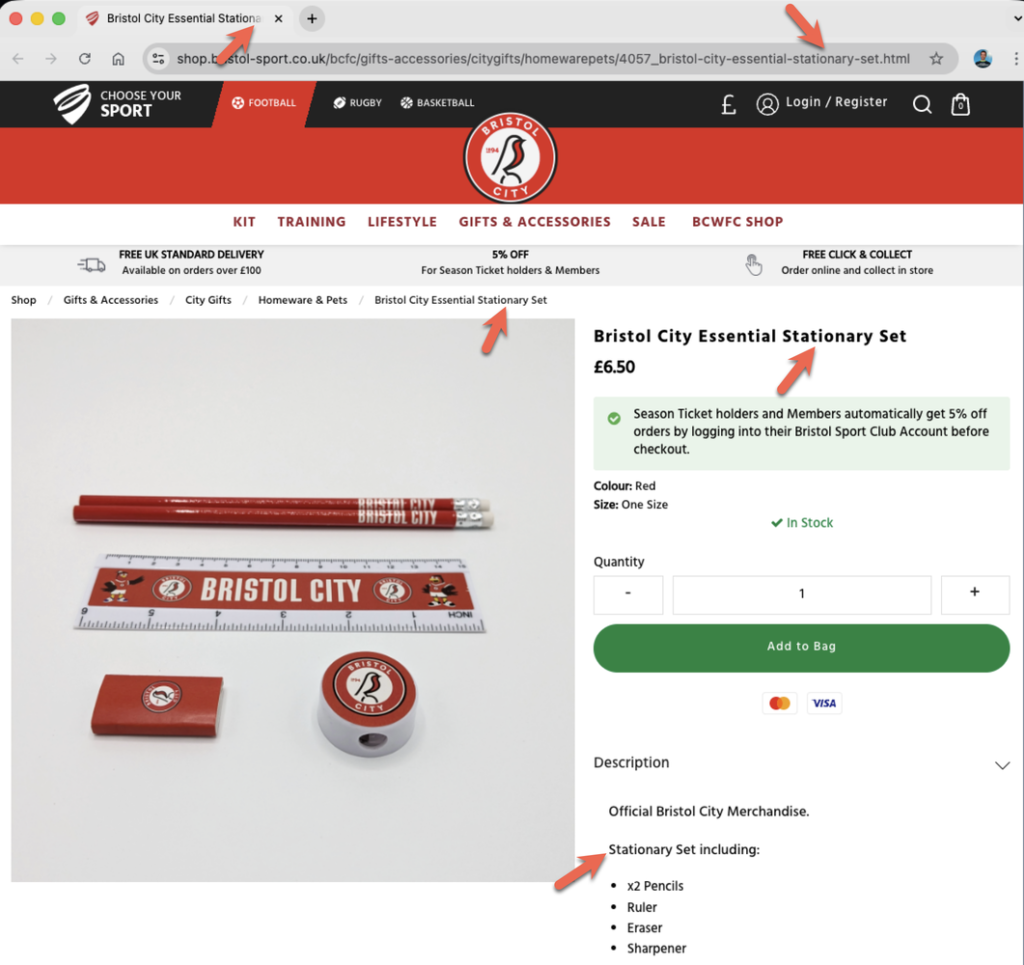
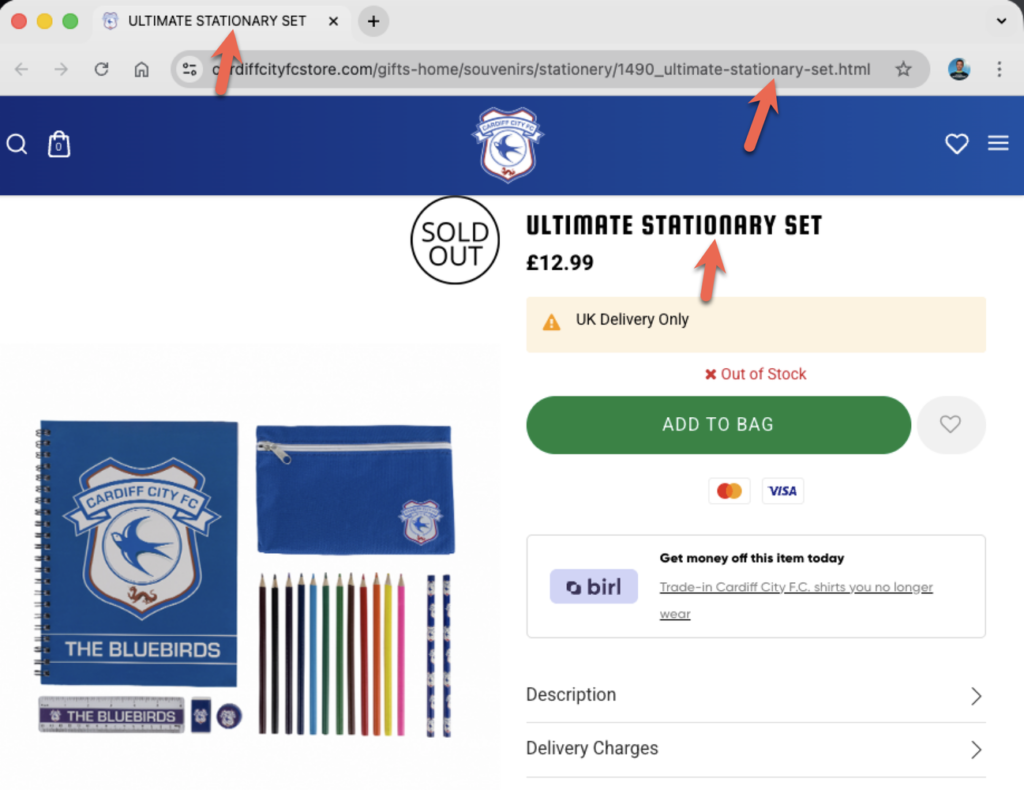
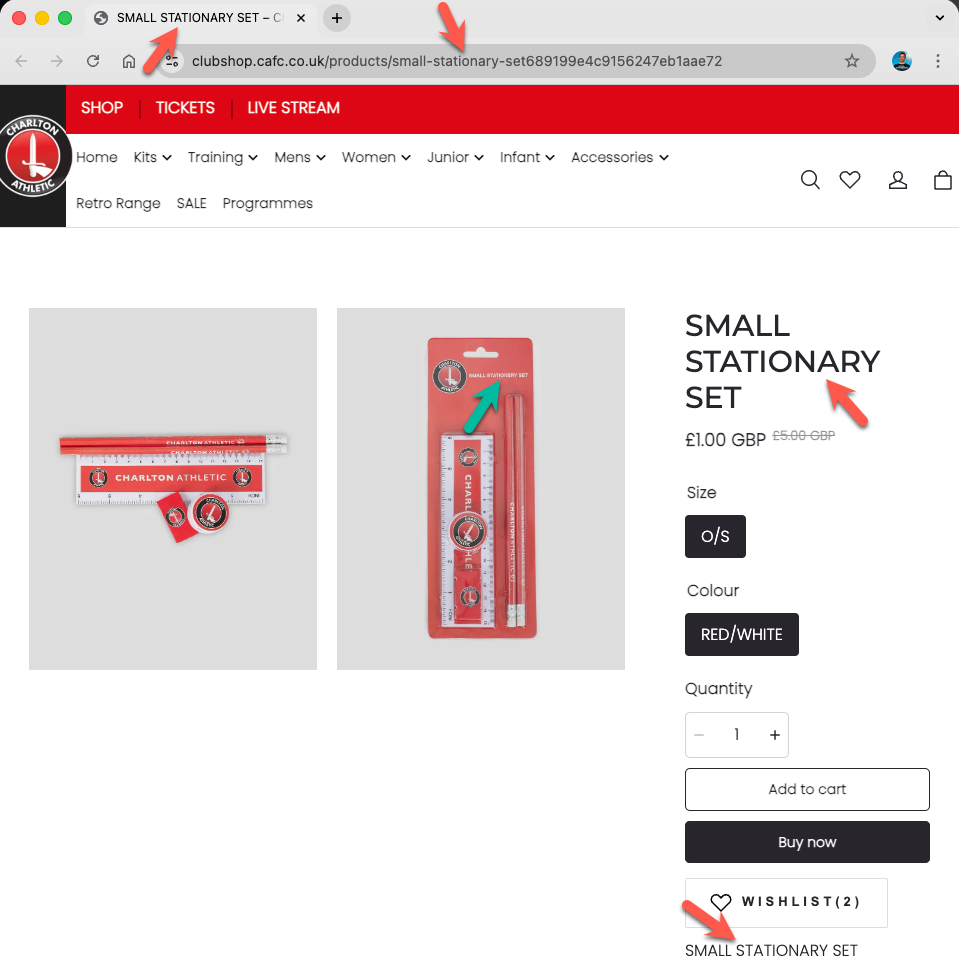
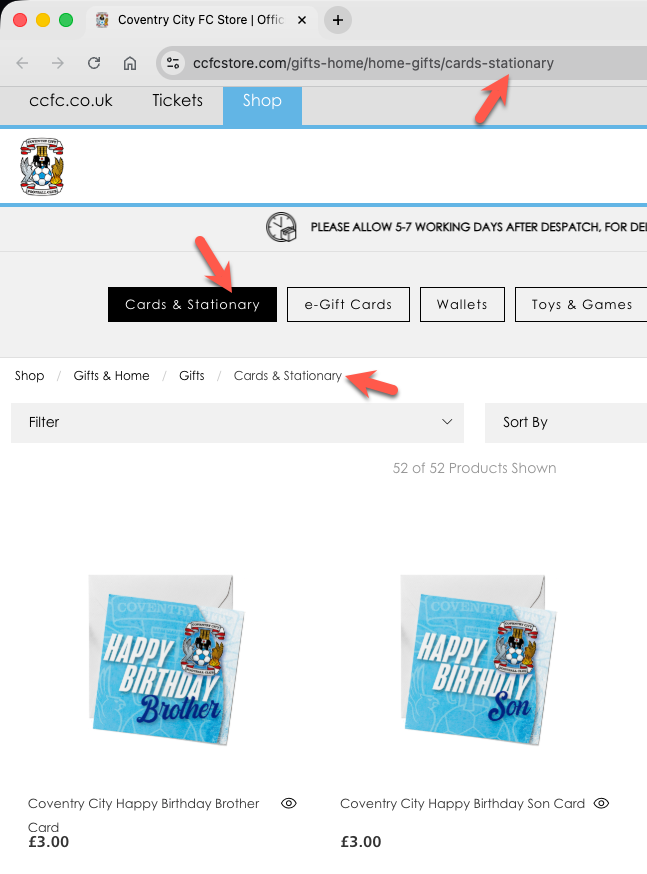
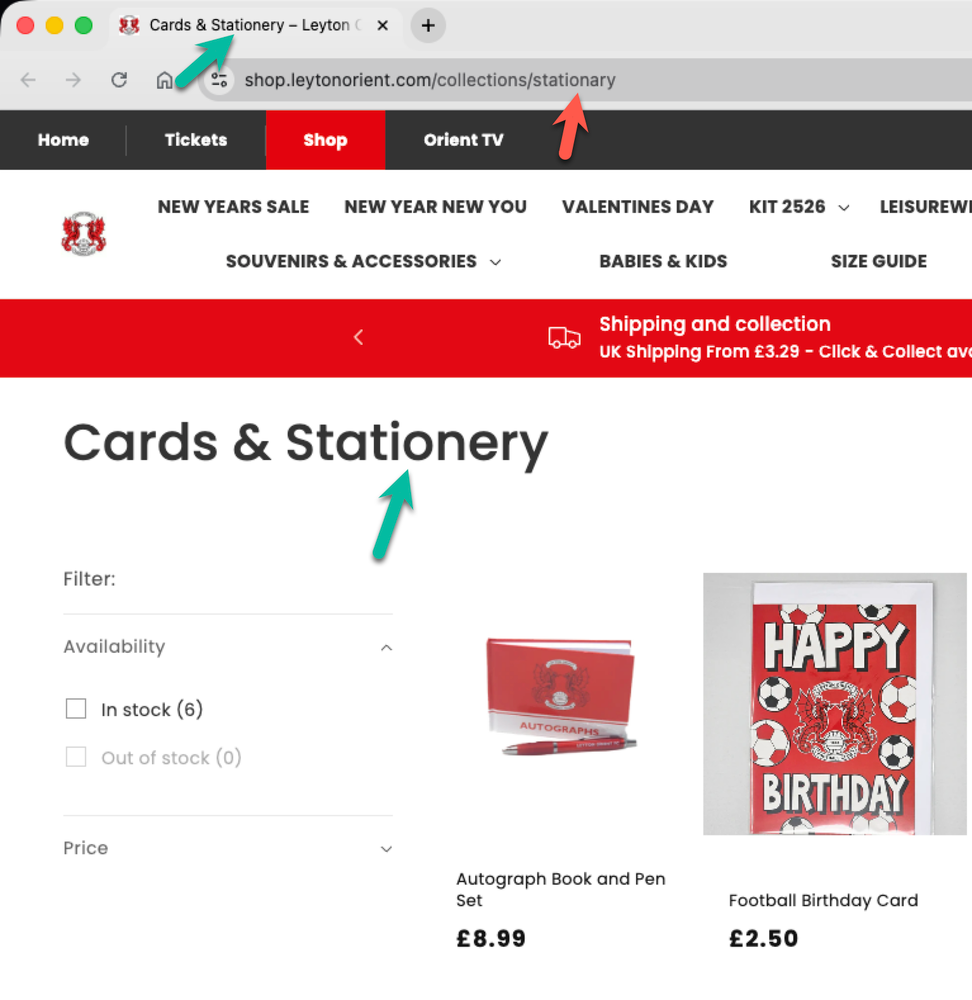
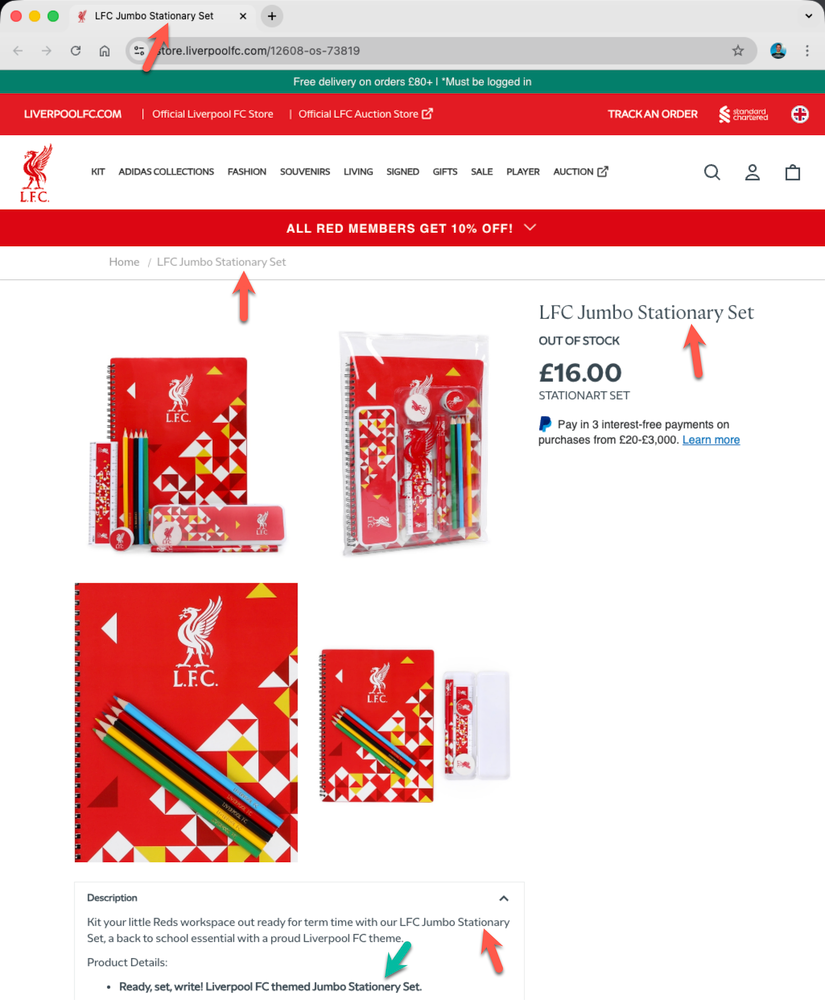
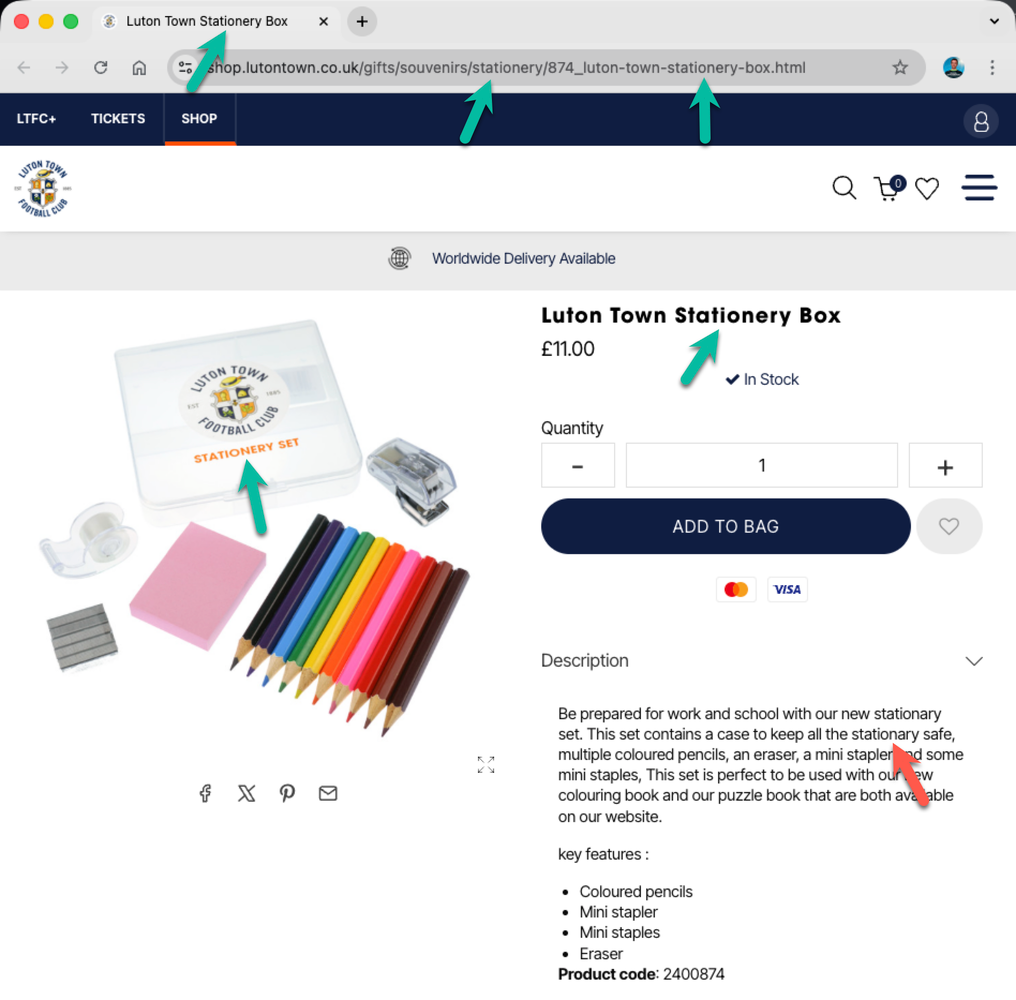
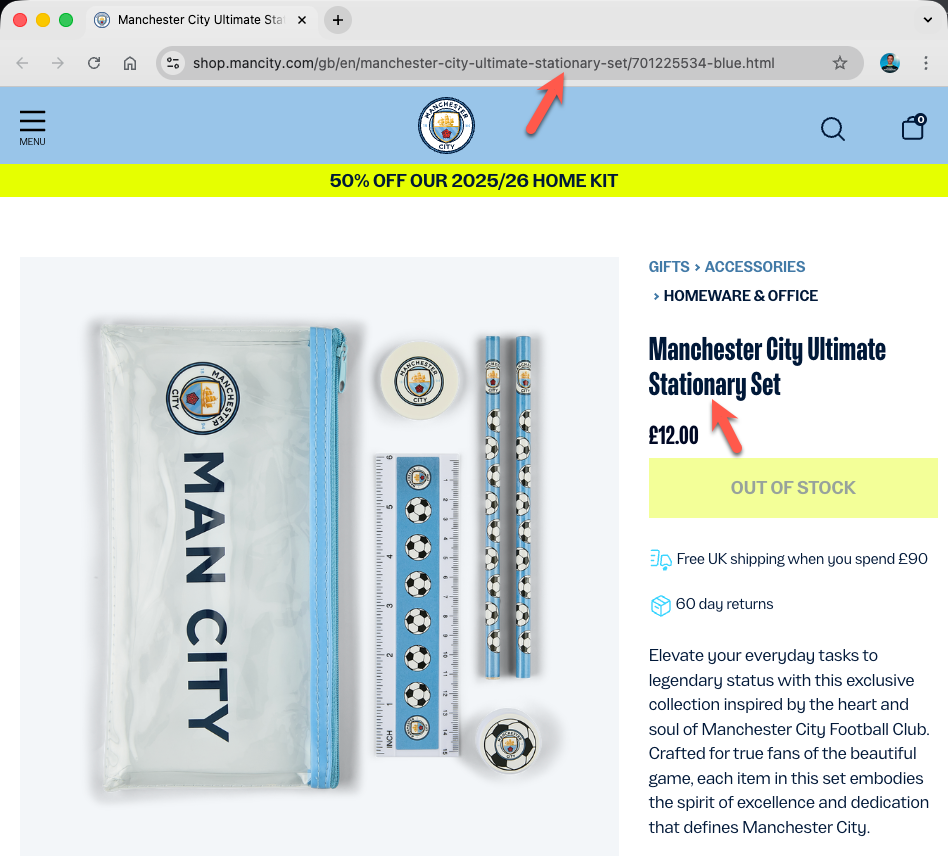
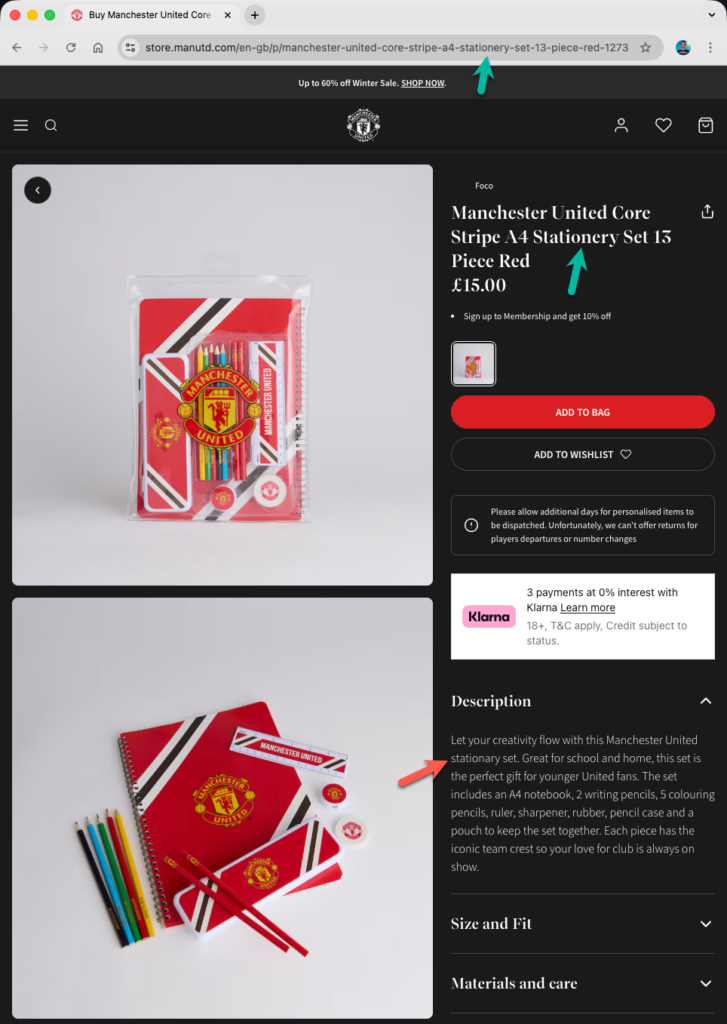
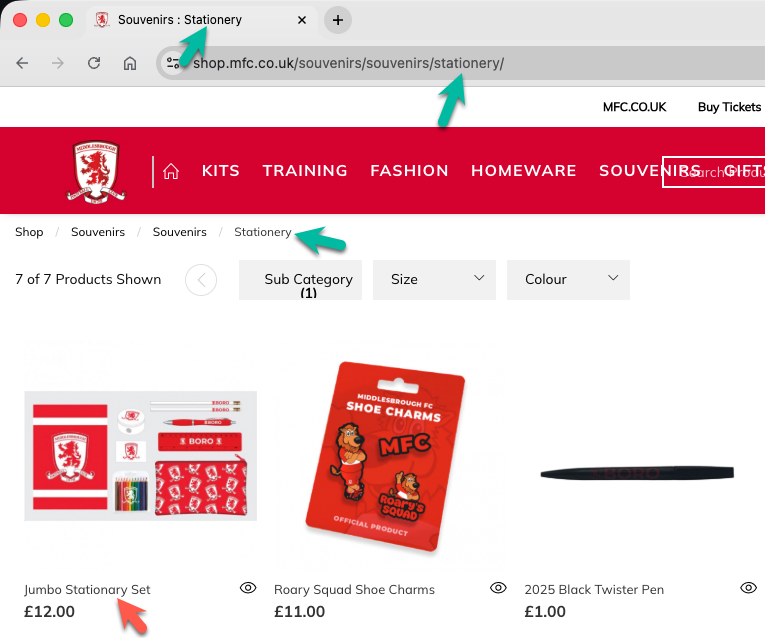
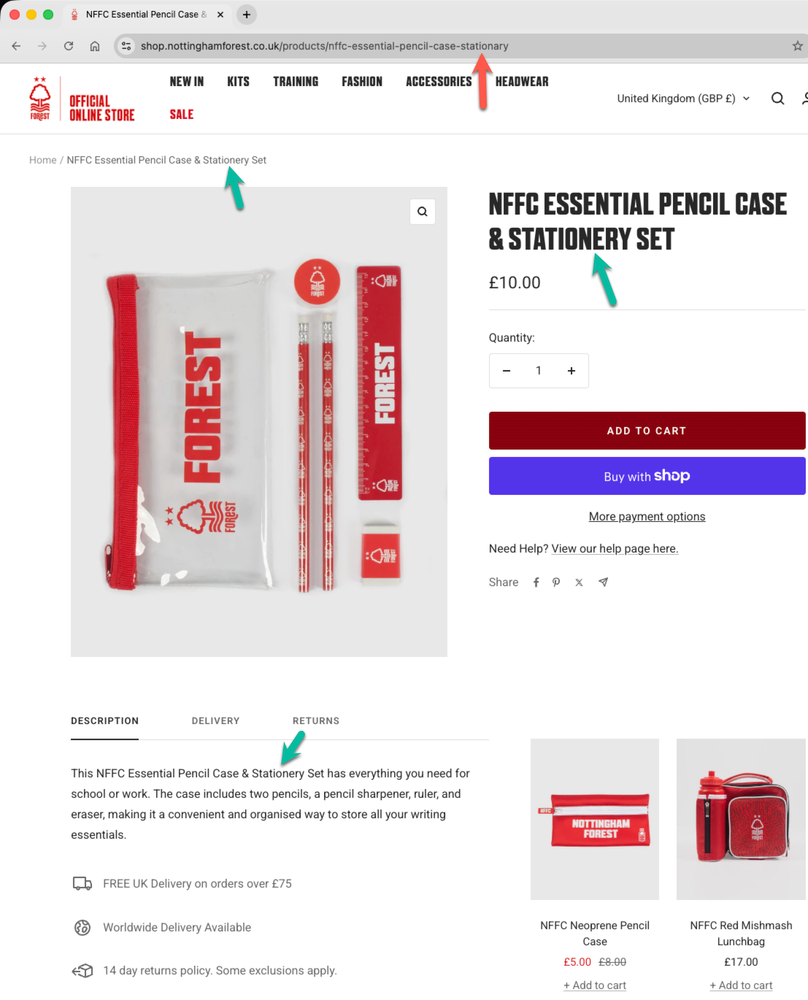
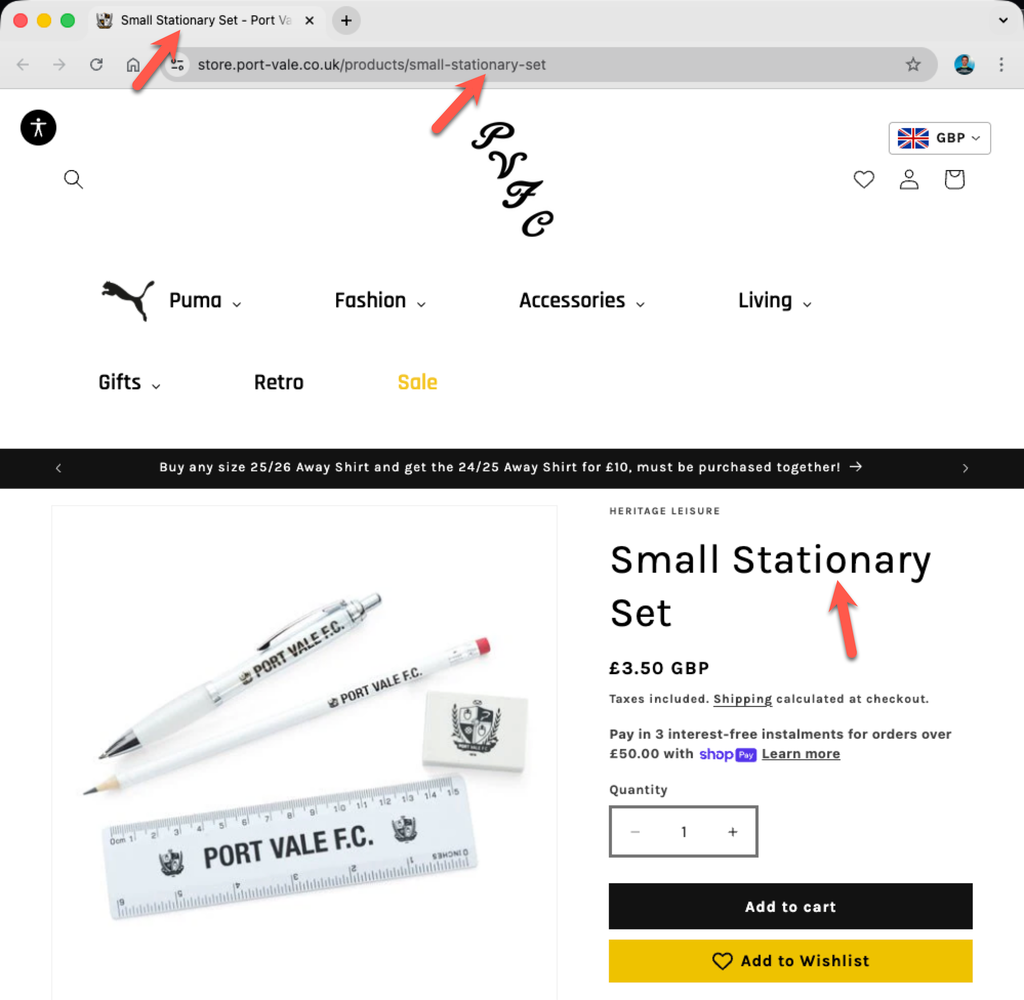
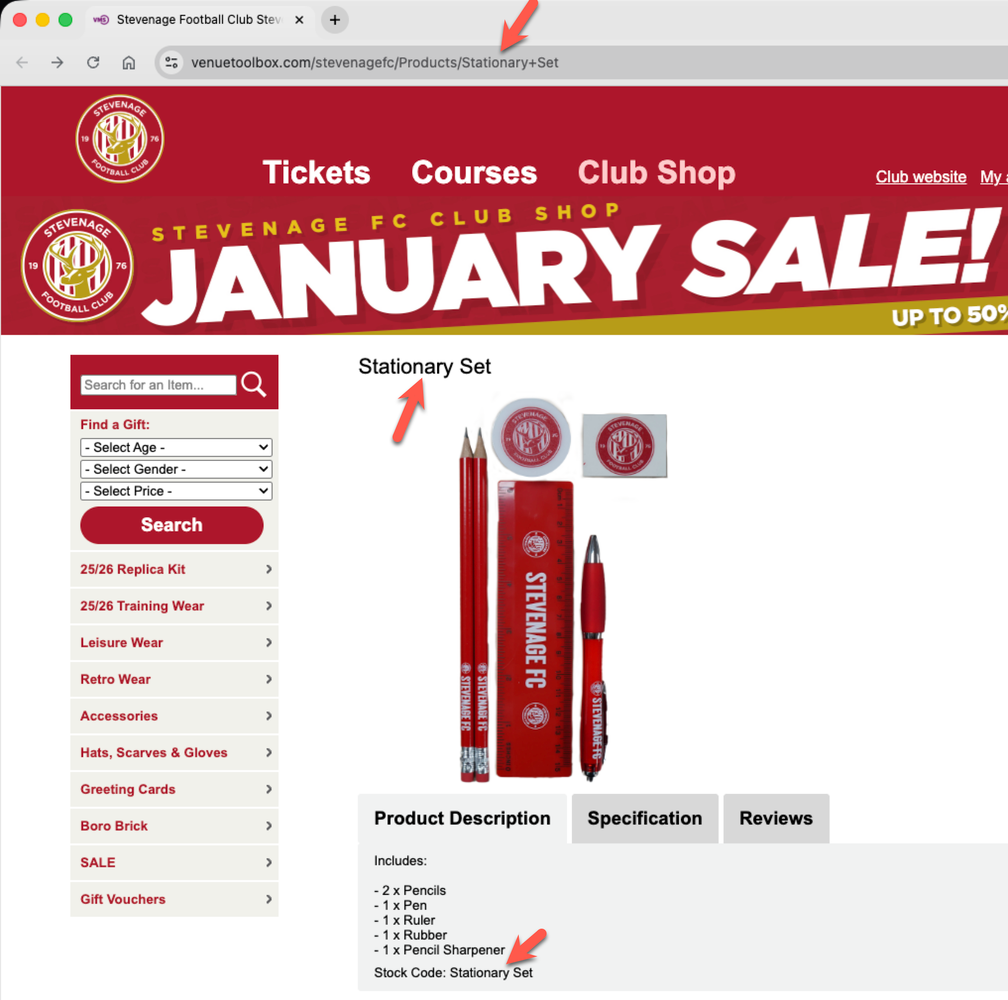
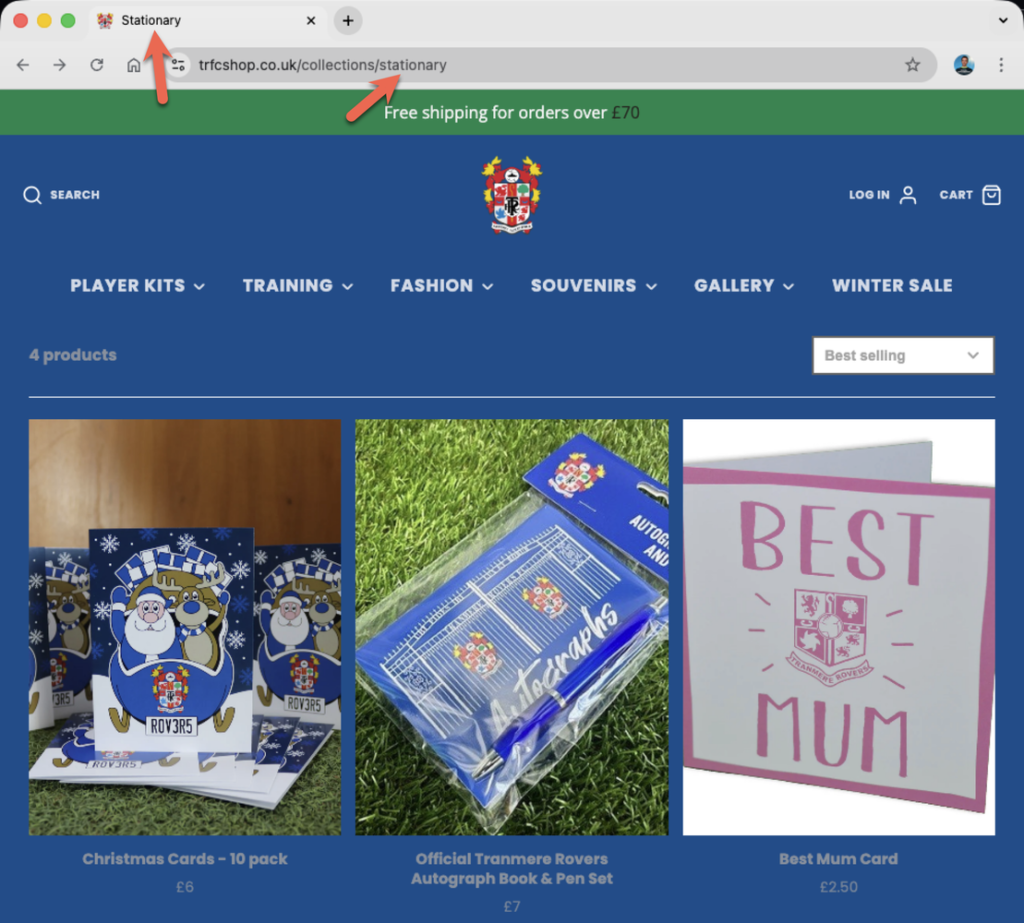
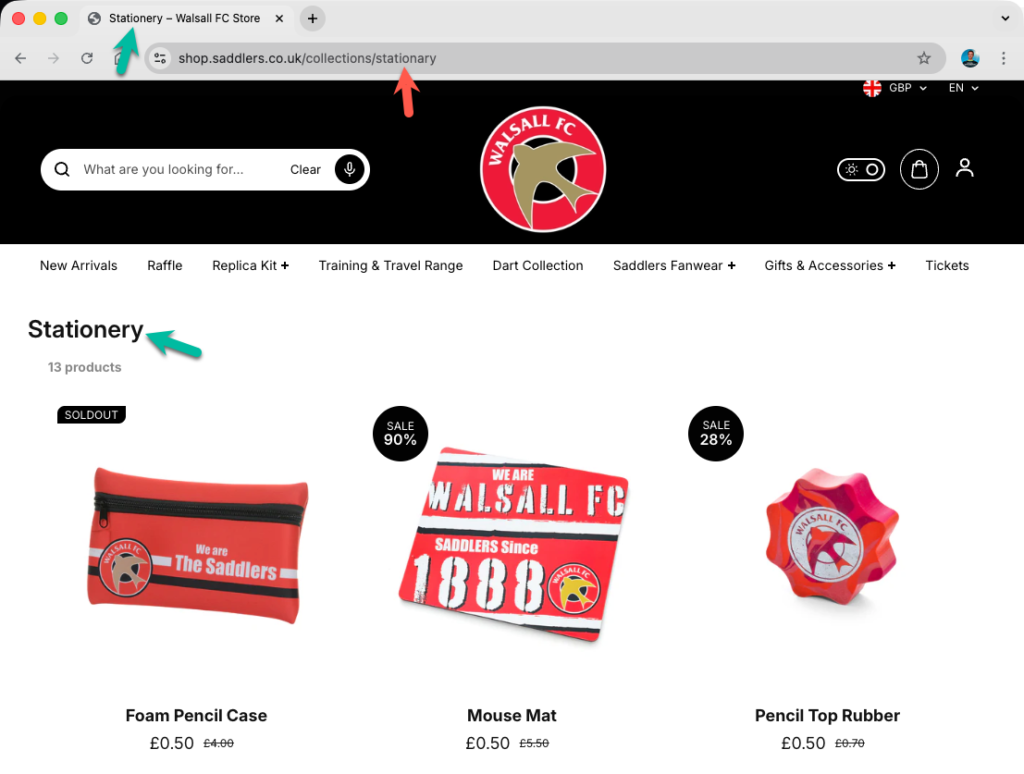
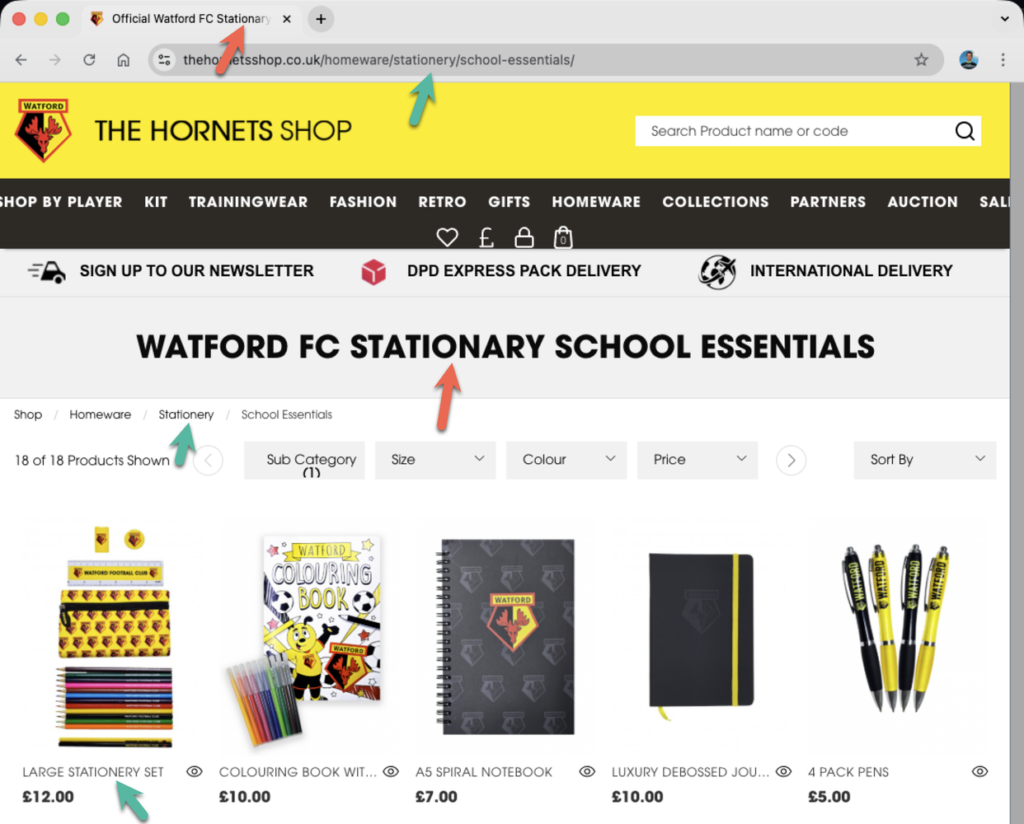
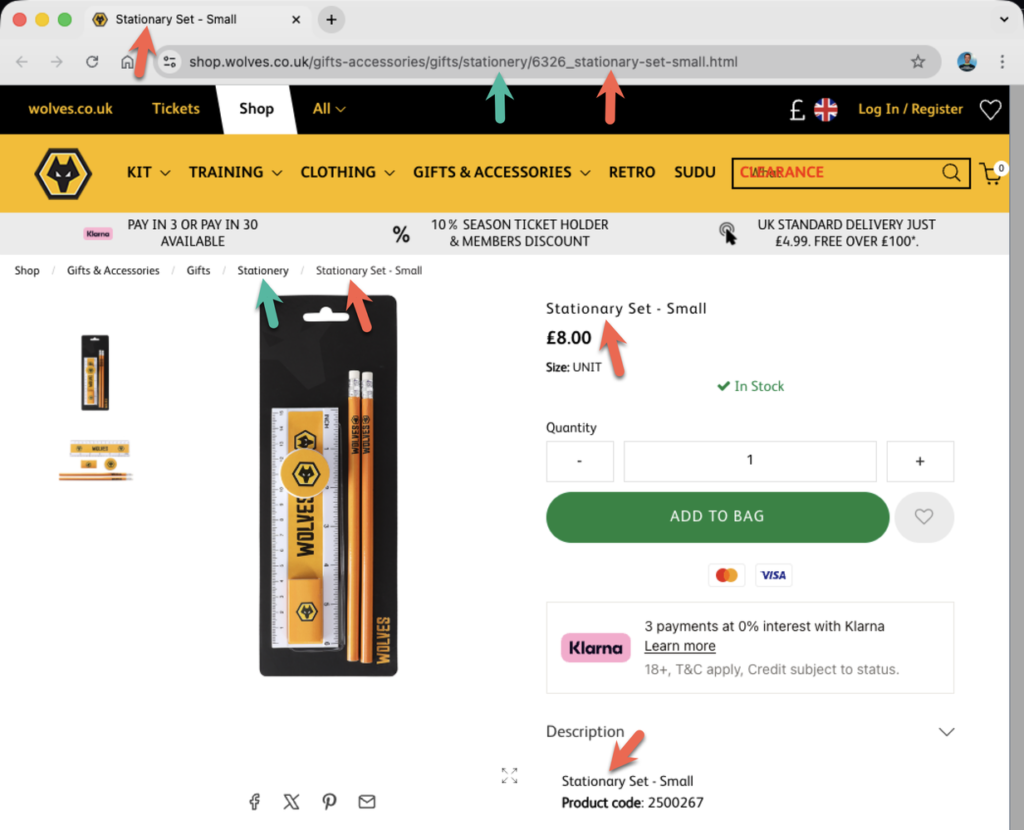
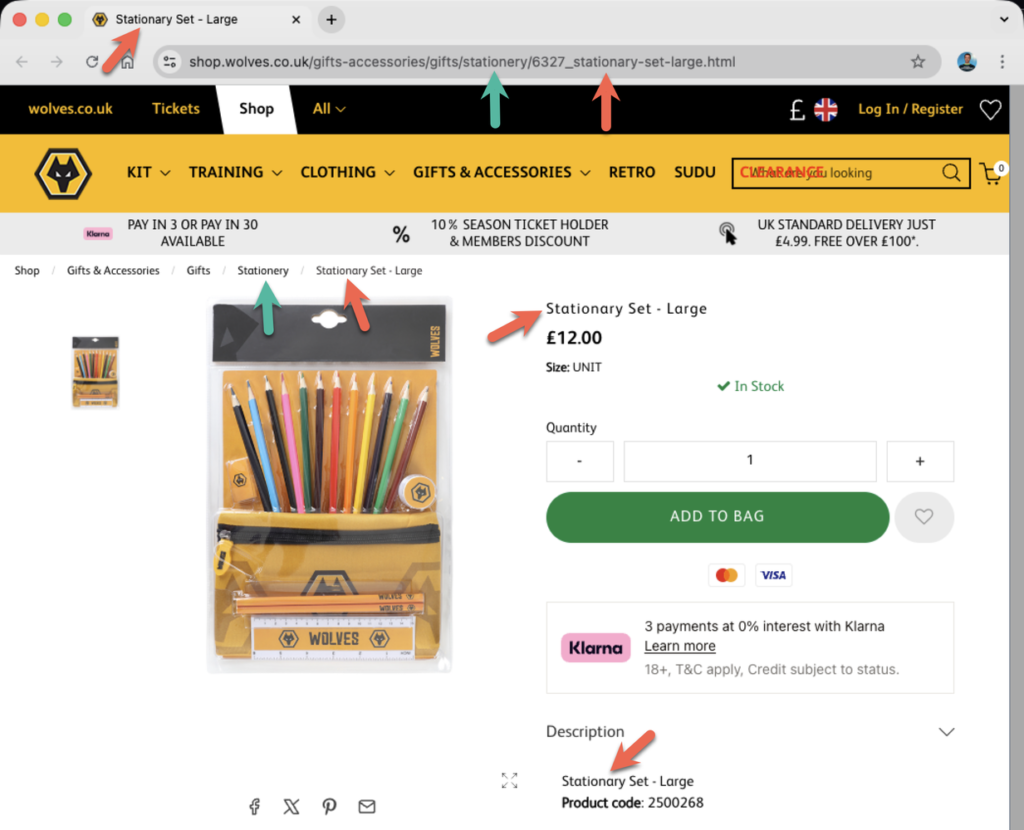
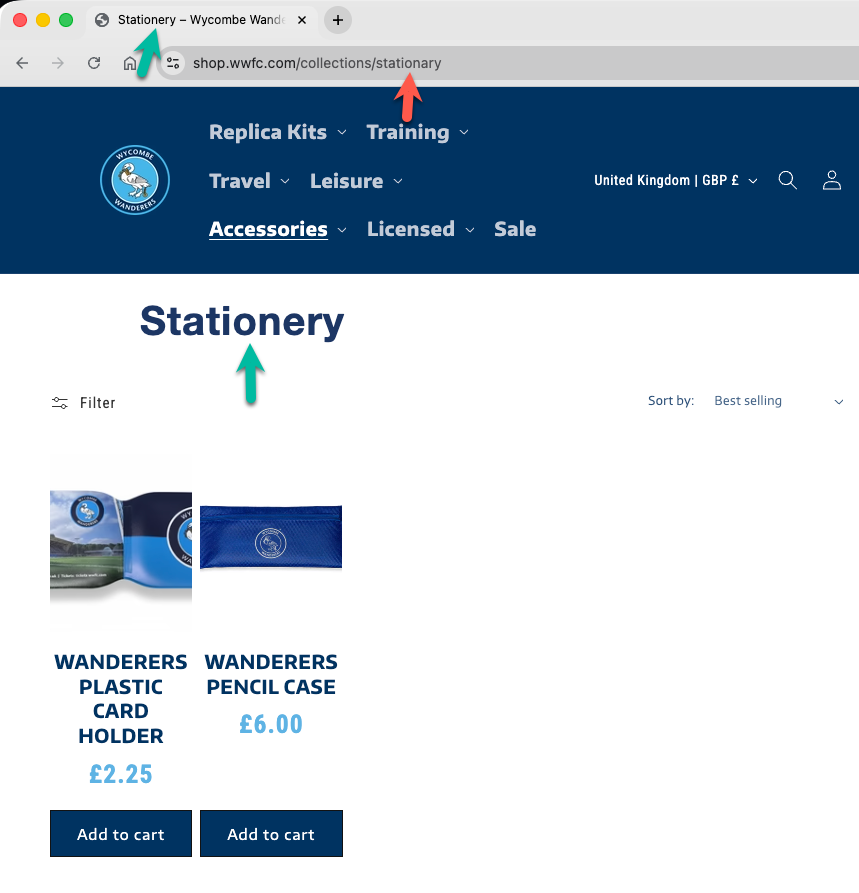
Below, I’ve listed each club along with a link to the affected store page. I’ve also included a screenshot showing the visible evidence of where stationery has been spelt incorrectly (and correctly if mixed). I’ve looked at three different places: the URL, the tab title, and the page content.
Birmingham City FC
https://clubstore.bcfc.com/giftsaccessories/accessories/home/544_stationary-set.html
Brighton & Hove Albion Football Club
https://shop.brightonandhovealbion.com/gifts/accessories/stationery
Bristol City Football Club
Cardiff City Football Club
https://www.cardiffcityfcstore.com/gifts-home/souvenirs/stationery/1490_ultimate-stationary-set.html
Charlton Athletic Football Club
https://clubshop.cafc.co.uk/products/small-stationary-set689199e4c9156247eb1aae72
Coventry City Football Club
https://www.ccfcstore.com/gifts-home/home-gifts/cards-stationary
Leyton Orient Football Club
https://shop.leytonorient.com/collections/stationary
Liverpool Football Club
https://store.liverpoolfc.com/12608-os-73819
Luton Town Football Club
https://shop.lutontown.co.uk/gifts/souvenirs/stationery/874_luton-town-stationery-box.html
Manchester City Football Club
https://shop.mancity.com/gb/en/manchester-city-ultimate-stationary-set/701225534-blue.html
Manchester United
https://store.manutd.com/en-gb/p/manchester-united-core-stripe-a4-stationery-set-13-piece-red-1273
Middlesbrough FC
https://shop.mfc.co.uk/souvenirs/souvenirs/stationery
Nottingham Forest
https://shop.nottinghamforest.co.uk/products/nffc-essential-pencil-case-stationary
Port Vale Football Club
https://store.port-vale.co.uk/products/small-stationary-set
Stevenage Football Club
https://www.venuetoolbox.com/stevenagefc/Products/Stationary+Set
Swindon Town Football Club
https://stfcdirect.com/products/stationary-set

Tranmere Rovers FC
https://trfcshop.co.uk/collections/stationary
Walsall Football Club Limited
https://shop.saddlers.co.uk/collections/stationary
Watford Football Club
https://www.thehornetsshop.co.uk/homeware/stationery/school-essentials
Wolverhampton Wanderers
https://shop.wolves.co.uk/gifts-accessories/gifts/stationery/6326_stationary-set-small.html
https://shop.wolves.co.uk/gifts-accessories/gifts/stationery/6327_stationary-set-large.html
Wycombe Wanderers Football Club
https://shop.wwfc.com/collections/stationary
Findings
It turns out that 21 of the 92 (23%) club stores had at least one instance of stationary. Due to the nature of my method, it’s highly possible I missed a few more, but it’s still a very high figure for a spelling error.
Admittedly, I could have written an automated script to crawl each webpage. That would have been more thorough, but I didn’t really need to. I just wanted to get a reliable-enough idea of the problem — and I did that.
Nevertheless, as you can see, some pages had instances of stationery and stationary. Perhaps this reflects the setup behind the scenes, with merchandising, content, and web responsibilities split across different roles — not to mention varying levels of literacy.
Ultimately, it shouldn’t come down to individual mistakes — particularly if too much weight is placed on someone more junior. In any professional hierarchy, there should be a layer of senior oversight approving copy before it goes live. That’s how contextual errors like this are caught and corrected, regardless of who originally wrote the text.
Spelling errors affect searches
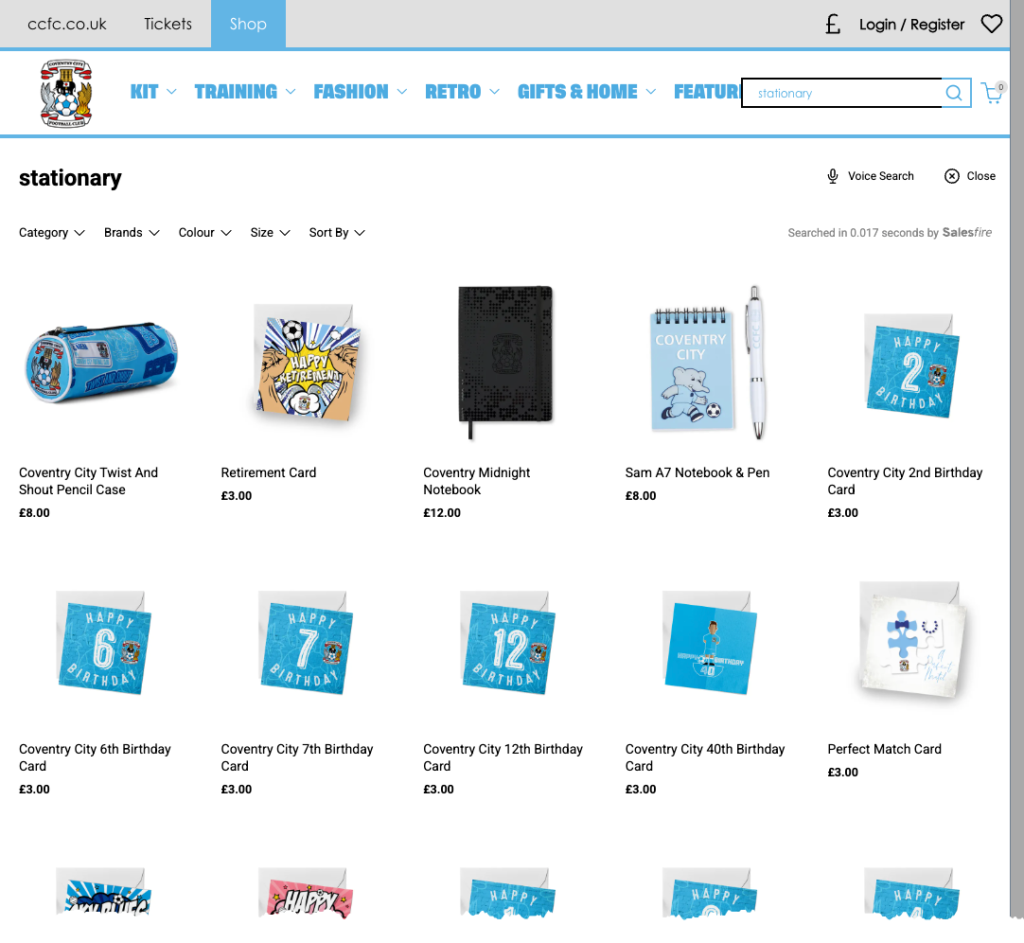
Most modern search systems on websites use fuzzy matching, making their capabilities more intelligent and less sensitive to typos. However, after I stumbled across Coventry City’s store, I realised this is not a given.
Searching for stationary returned a whopping 52 results.
Then I tried stationery… nothing appeared.
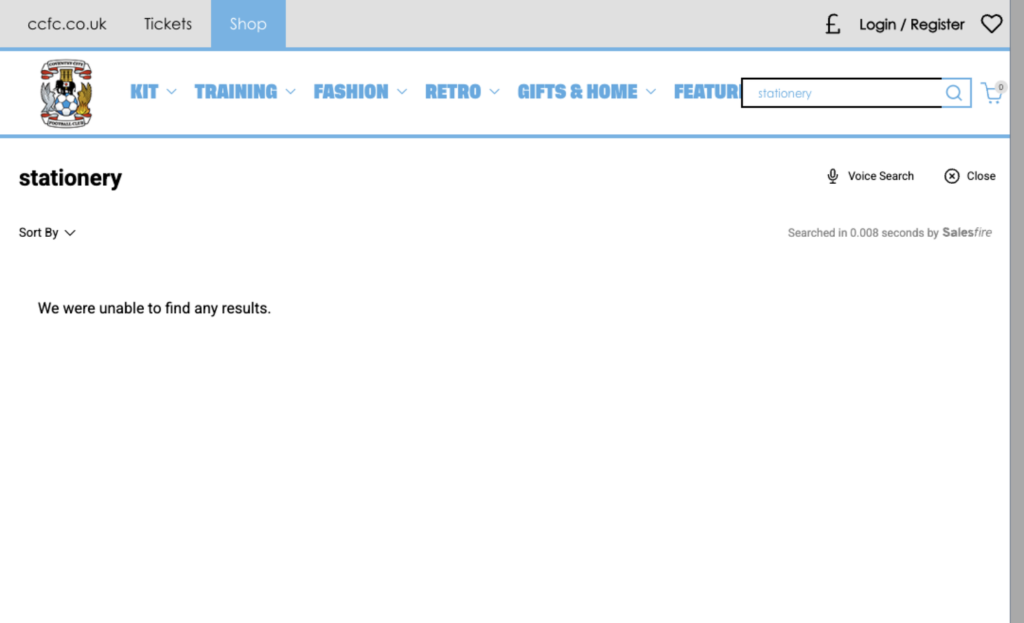
Having tested it, the search system doesn’t appear to be using literal matching based purely on item titles, but it also isn’t applying true fuzzy matching. Instead, it’s likely relying on partial matching, where the results contain shared sequences of characters rather than an understanding of meaning.
This approach is weaker than fuzzy matching. While it can cope with incomplete or slightly mistyped input, it fails to account for common contextual errors — effectively rewarding the incorrect spelling while penalising the correct one.
In practical terms, this affects product discovery. If customers can’t easily find what they’re looking for, sales are likely to take a hit.
In some cases, these underlying issues surface directly in the interface. On Sports Direct’s site, both “Stationery” and “Stationary” appear as separate filter choices in two places.
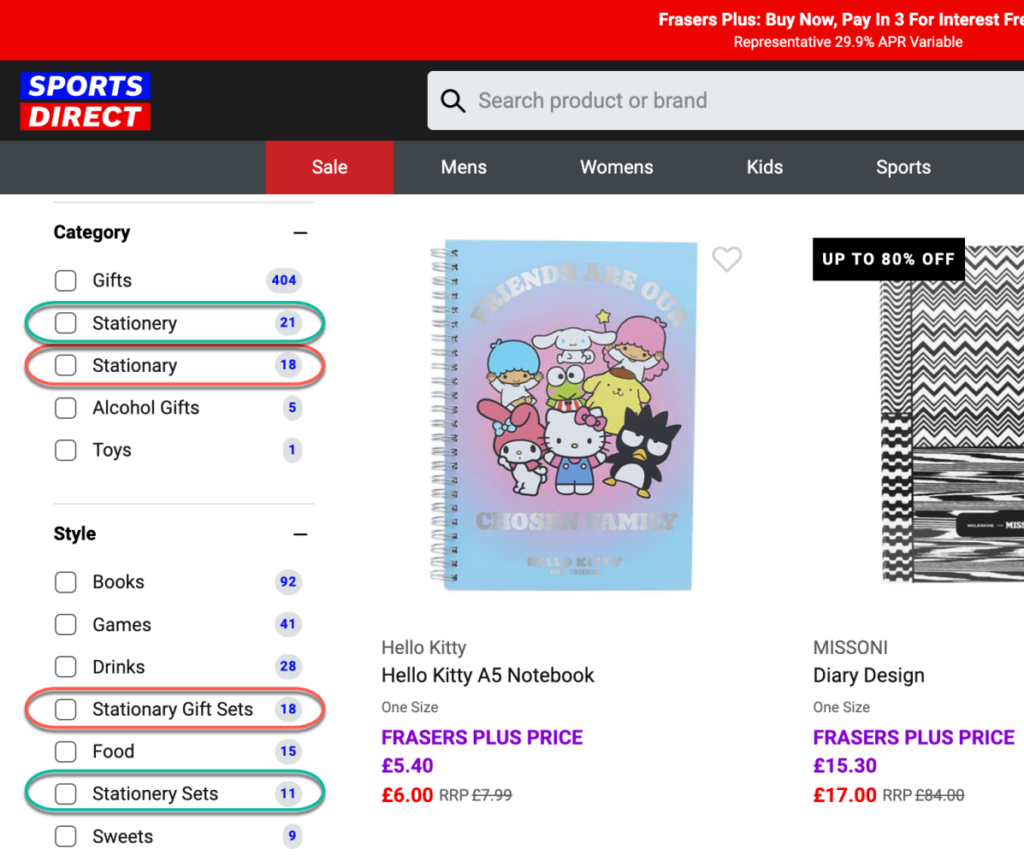
Having already experienced one embarrassing mishap, you’d think they would have gone out of their way to tackle the issue everywhere else — but no.
The source code is revealing
As I delved deeper into the investigation, I used my browser’s Inspect Element feature to check whether there were any further instances of stationary lingering in the source code.
There were. In fact, I found a number of pages beyond the ones listed hidden in various HTML tags, even when none of those affected the visible webpage content.
For example, Tottenham Hotspur Football Club’s Office & Stationery page didn’t make the list because it doesn’t contain stationary — not in the URL, the title, or the page copy. However, when I examined the markup, I found one trapped at the end of a meta tag.
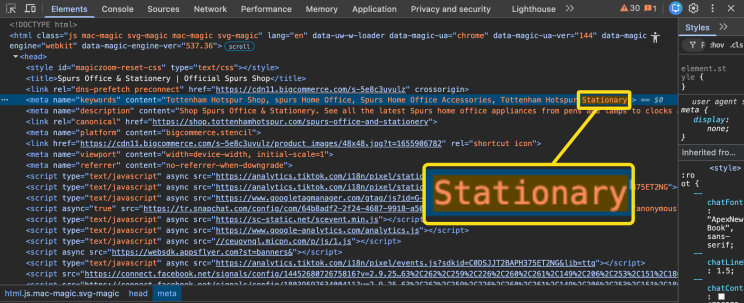
It became apparent to me that, at some point, many of these clubs had probably recognised their initial mistakes and attempted to correct them. The problem is they forgot about all the peripheral elements: page titles, slugs, metadata, category names, and internal search indexes.
Final thoughts
What this investigation proves is that spelling mistakes like this don’t just happen — they get baked into a site’s structure. Correcting the visible copy alone isn’t enough. Without a proper clean-up behind the scenes, traces remain, continuing to affect discovery, search behaviour, and credibility.
Fixing this properly requires more than a quick edit. It means taking the time to audit and align how a site is organised and indexed so that everything is consistent and correct. It’s unglamorous work, but it’s essential if mistakes are to be removed completely rather than simply covered up.
There’s also a wider knock-on effect. Particularly for younger users, people learning English, or anyone using the web as a reference point, repeated exposure to incorrect spellings normalises them. When the same mistake appears across well-known brands and major retail sites, it begins to feel culturally acceptable — even correct. Consistency matters, because it’s consistency that helps people learn, reinforces standards, and reduces ambiguity.
I’ve tagged each company and football club mentioned in this post in the hope that it prompts a closer look — and, ideally, a proper deep clean. Because correcting a mistake properly isn’t just about fixing what people can see — it’s about fixing what they can’t.